
From “I Should Meditate” to “I Can Meditate”: A Beginner’s Roadmap You Won’t Hear in Apps

Everywhere you turn, someone is telling you to meditate: your doctor, your favorite podcast, that one friend who suddenly “glows.” Maybe you’ve even downloaded a few apps, tried a five‑day streak, and then… fell off when life got busy again.
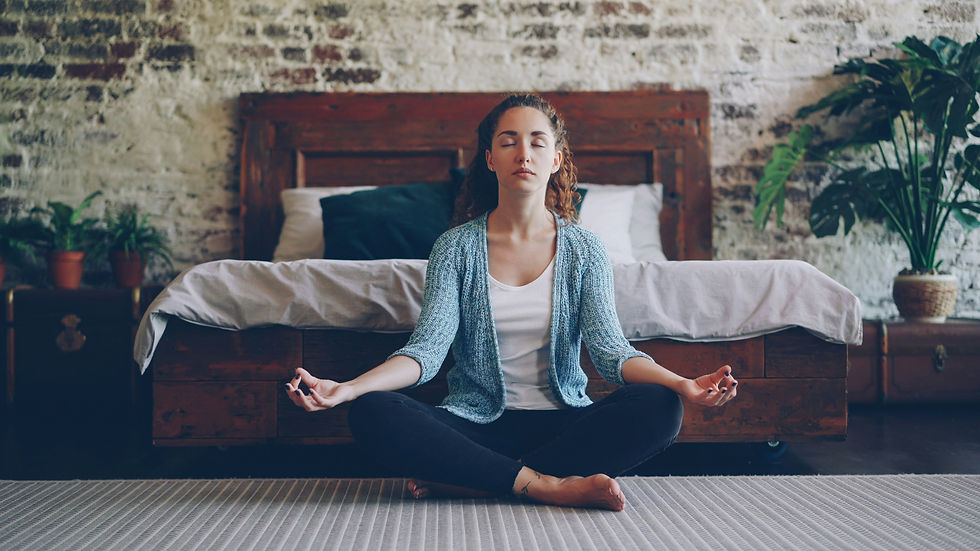
If you’ve ever thought, “I know I should meditate, but I have no clue what I’m doing,” you’re not alone. Most of us were never given a simple, honest roadmap for what beginner meditation actually looks like. We’re shown images of serene people on cushions—not the reality of fidgeting, wandering thoughts, and checking the timer every 30 seconds.
In this post, I want to offer you the roadmap I wish more people had at the beginning: what to expect in your first 30 days of practice, how to set yourself up for success, and why small, consistent steps matter more than perfection. Think of it as a friendly orientation before you step into something new.
If you want to learn this live with support, we’ll be diving into all of this (and more) at our Intro to Meditation & Mindfulness workshop on Saturday, May 30, 3:30–6:30 pm PT at Dance Masters Ballroom in Agoura Hills, hosted by Builders of a Better World with Queen of the Mind’s Ashlieya.

What Most Beginners Get Wrong (And It’s Not Their Fault)
A lot of people quietly decide that meditation “doesn’t work” for them based on a very short, very confusing first experience. It’s not that they failed; it’s that they were given impossible expectations.
Here are a few common misunderstandings I see over and over:
“If I’m not calm, I’m doing it wrong.” Many beginners assume that the whole point of meditation is to feel peaceful the entire time. When they sit down and experience nothing but noise, discomfort, and restlessness, they decide they’re “bad” at it and quit just when the practice is starting to make a difference.
Trying to meditate like a monk on day one. Beginners often jump straight into long sits, total silence, or complex techniques meant for people with years of practice, instead of building up gradually. It’s like signing up for a marathon when you’ve never jogged around the block.
Using apps without understanding the context. Apps can be helpful, but they don’t always explain what’s happening in your brain and nervous system, or why your mind is supposed to wander. Without that context, normal experiences can feel like failure when they are actually signs that you’re training attention and awareness.
So what should you expect in the beginning?
Your mind wandering every few seconds. That’s not a bug; it’s the training ground. Each time you notice you’ve wandered and gently come back, you’re strengthening your attention and self‑awareness.
Physical fidgeting, boredom, or restlessness. Your body may not be used to pausing, and your nervous system might still be in “go mode.” This is especially true if you’re stressed, busy, or creative.
Quiet moments that show up in between, more often over time. At first, those moments might be tiny—one breath that feels different, one small pocket of space between a thought and a reaction. Over a month or more of practice, those moments tend to grow.
When you know that this is all part of the process, it becomes much easier to stick with meditation long enough to feel the benefits: easier emotional regulation, more awareness of your thoughts, better sleep, and a sense that you’re not quite as reactive as you used to be.
A Gentle 30-Day Beginner Roadmap
Instead of aiming for “perfect meditator” status, think of your first month as an experiment in showing up gently and consistently. Here’s a simple, week‑by‑week roadmap you can follow.
Week 1: 3 Minutes a Day, Tops
Goal: Make it so small you can’t talk yourself out of it.
Choose one anchor for your attention: breath, sounds, or body sensations (like the feeling of your feet on the floor).
Sit or lie down in any position that’s comfortable and sustainable; there’s no prize for suffering through an uncomfortable posture.
Set a timer for 3 minutes. For that time, simply notice your anchor. When (not if) your mind wanders, label it gently (“thinking,” “planning,” “worrying”) and come back.
Celebrate the fact that you showed up at all, even if your mind was all over the place. The commitment is the win this week.
Week 2: 5 Minutes, and Expect Wobble
Goal: Gently increase the container and start noticing patterns.
Bump your practice up from 3 to 5 minutes a day. It will feel like a lot at first; that’s okay.
Start getting curious about when you practice. Do mornings feel a little more spacious? Are evenings quieter? Noticing your own rhythm will help you design a practice that fits your life.
Experiment with bringing one tiny practice into daily life:
One slow breath before you open your email.
Feeling your feet on the ground while you stand in line.
Relaxing your jaw and shoulders at a red light.
You may have days where you don’t feel like meditating or you forget altogether. That’s normal. When that happens, gently resume the next day without making it a big story about your willpower.
Weeks 3–4: Experiment and Adjust
Goal: Find what your nervous system actually responds to.
Try a different anchor or style and notice how you feel. For example:
A short body scan (moving your attention gently from head to toe).
A hand‑on‑heart practice with a kind phrase like “Right now, it’s okay to pause.”
A simple loving‑kindness phrase like “May I meet this moment with kindness,” repeated quietly.
Pay attention to what feels regulating for you—not what you think meditation is “supposed” to look like. Your best practice might be very simple and not particularly Instagram‑worthy.
Give yourself permission to keep it small but consistent. Ten minutes every other day can be more powerful than a single 40‑minute sit that leaves you burned out.
By the end of 30 days, the real win isn’t perfection. It’s that you’ve started to build a relationship with your own mind and nervous system—and you have a clearer sense of what actually helps you.
In our upcoming workshop on May 30, we’ll walk you through several beginner‑friendly practices and help you design a plan that makes sense for your real schedule, not an imaginary perfect day.
How to Know It’s “Working” (Beyond Feeling Blissful)
One of the most common questions beginners ask is, “But how do I know if it’s working?” If you’re waiting for a totally empty mind or a permanent state of bliss, you’ll probably end up disappointed. Those moments can happen, but they’re not the main point.
Instead, look for more grounded, everyday signs:
You notice you’re stressed sooner. You start catching yourself in the middle of a spiral instead of hours later. You hear your inner voice say, “Wow, I’m really wound up right now,” and that noticing is new.
You catch yourself taking a breath before reacting. Instead of snapping back immediately in a tough conversation, you pause—even for two seconds—and then respond a little more thoughtfully. That tiny gap is a huge sign that your practice is reshaping how you relate to your thoughts and emotions.
You experience small pockets of presence that feel spacious. You find yourself suddenly really tasting your coffee, feeling the water on your hands while you wash dishes, or noticing how calming it is to watch your kid or pet breathe. These moments don’t erase hard things, but they give you access to more ease in between.
You’re a bit kinder to yourself. Your inner commentary may still show up, but it’s slightly less harsh, or it passes more quickly. You might notice yourself saying, “Okay, this is a hard day,” instead of “What’s wrong with me?”
None of this requires you to become a different person. Meditation doesn’t turn you into a robot who never feels stress or sadness; it gives you more choice in how you respond. That capacity to notice, pause, and choose again is the real metric of progress, not how many minutes you sat perfectly still.
A Next Step (If This Feels Like a Relief)
If this roadmap feels like a relief—if it makes meditation seem a little more human and a lot less mysterious—you’re exactly the kind of person we created our Intro to Meditation & Mindfulness workshop for.
On Saturday, May 30, we’ll gather at Dance Masters Ballroom in Agoura Hills (with a live virtual option) for 3 hours of teaching, guided practice, and Q&A, led by Queen of the Mind’s Ashlieya, a meditation and nervous system educator devoted to making these tools accessible and grounded. You’ll also receive a workbook and slide deck you can take home so you have prompts and explanations to support your first 30 days and beyond.
👉 Learn more and save your spot (in person or online): https://www.buildersofabetterworld.org/event-details/intro-to-meditation-and-mindfulness.



Comments