
Episode 4 - Freedom is the Why: Neff's Health Transformation


Choose Your Hard: Neff's Story of Dance, a Foot Wound, and Radical Freedom
What happens when the thing you love most is suddenly on the line?
For Neff, a professional dance instructor of over 30 years, dance isn’t just a job. It’s identity, joy, confidence, and community all wrapped into one. When a severe foot wound, soaring blood sugar, and 300+ pounds of weight gain threatened his ability to move—let alone dance—everything had to change.
In this episode of Builders of a Better World, we explore how a health crisis became the doorway to a deeper “why,” a radical lifestyle shift, and a very real kind of freedom.
Dance as a Lifeline
Neff started dancing as a teenager and knew within his first year on the floor that he’d found his life’s work. By 18, he was already teaching. Over the next three decades he would:
Compete on formation teams and as a professional
Teach social and competitive dancers of all ages
Immerse himself in music, nightlife, and studio life as his entire world
Dance gave him confidence he hadn’t known before, a sense of purpose, and an almost limitless stream of positive energy to share with others. It also became his livelihood—20+ years of making a living primarily through teaching and performing.
So when his body started to fail him, the stakes weren’t abstract. They were concrete, immediate, and terrifying.
The Foot Wound That Changed Everything
Like many people, COVID radically disrupted Neff’s routines. The studio shut down for a year and a half. His movement plummeted, his eating drifted toward comfort and convenience, and his weight climbed until he crossed 300 pounds at 5'10".
He stopped weighing himself after seeing 297 on the scale. From there, he just… looked away.
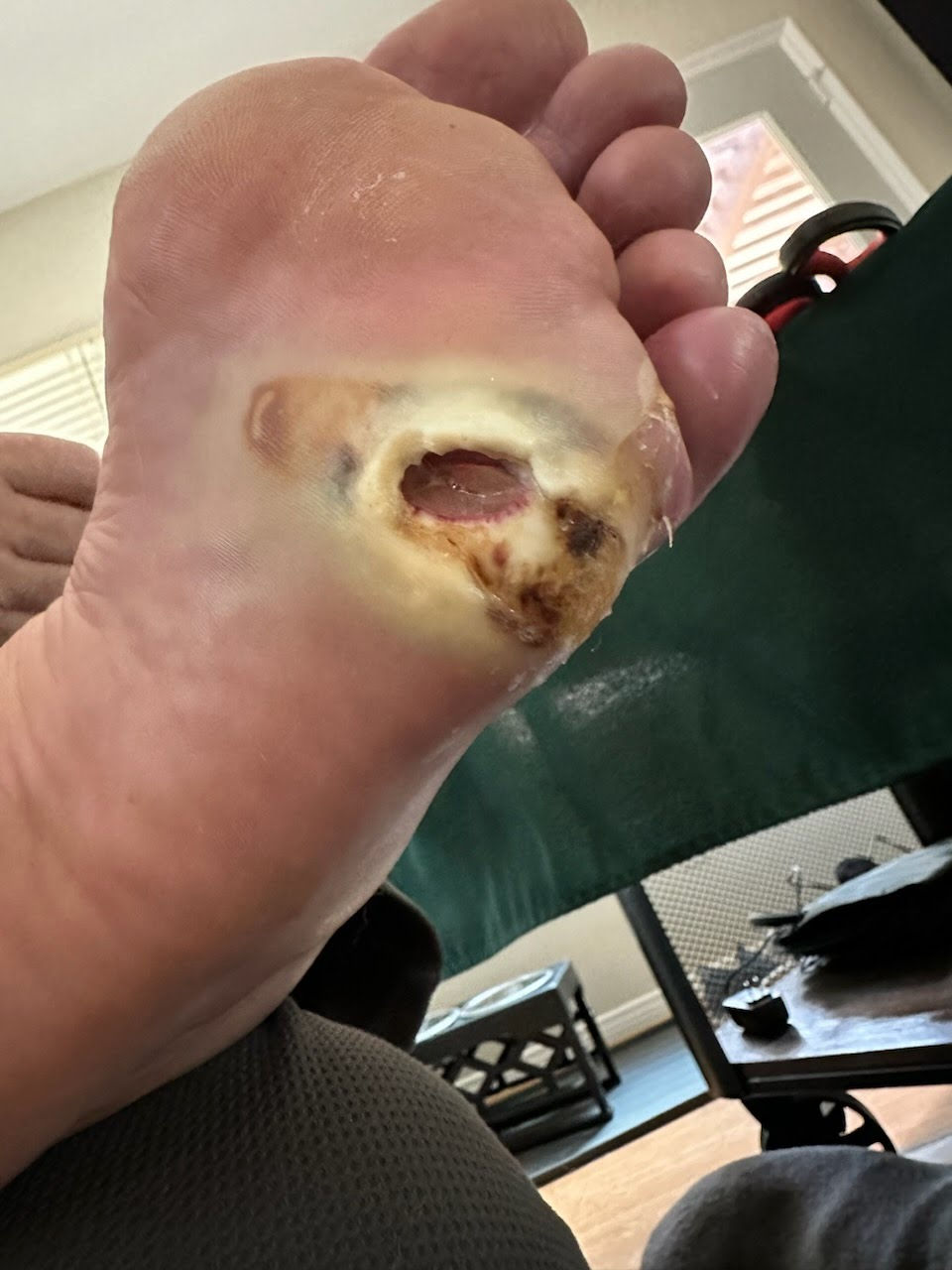
A “I should really do something” moment led to a hike. That hike led to blood blisters on the bottom of his feet that he couldn’t feel, thanks to nerve damage tied to his weight and blood sugar issues. By the time he noticed something was wrong, his foot was swollen, hot, and red.
Urgent care sent him straight to a wound specialist.
“You have a hole in the bottom of your foot.”
The wound was literally tunneling into his foot, growing in both width and depth. Doctors warned that if the infection reached the bone, amputation could be on the table. For a man whose entire career and identity was tied to movement, that possibility was almost unthinkable.
At the same time, his blood sugar came back high. A diabetes diagnosis and medication were put on the table.
Neff made a different choice.
Finding a Why: Freedom Over Comfort
In the episode, we talk about the moment everything crystallized: the realization that he was repeatedly choosing short-term comfort over long-term freedom.
Late-night fast food after classes because cooking felt “too hard”
Soda and candy at long DJ days behind the booth
Ice cream four nights a week, in generous servings, as a primary emotional comfort
The foot wound turned an abstract “I should be healthier” into a visceral, urgent question:
Ice cream or my foot? Comfort or freedom?
When Neff talks about his why now, he doesn’t say “weight loss” or “diabetes reversal.”
He says freedom.
Freedom to dance, to walk stairs without pain, to get off the floor without pulling himself up, to live without constant fear that a small injury could spiral into disability. Freedom to live the kind of life he actually wants, not the life his habits quietly lock him into.
That clarity became the anchor for every decision that followed.
From Processed Sugar to 70+ Pounds Lost
Neff’s first non-negotiable change was deceptively simple: cut out processed sugar.
No candy. No soda. No standard desserts. No “it’s just a little treat” exceptions.
This wasn’t about perfection or punishment. It was about aligning his daily choices with his why. The more he fully committed, the easier it became to say no—even when people around him assumed it must be agonizing.
Alongside eliminating processed sugar, Neff also experimented with fasting:
Shorter daily windows of eating
Extended fasts of up to 48 hours, and at times 4-day fasts
Lots of water, and a willingness to ride through “programmed hunger” at typical meal times
He shares a powerful insight: much of what we call “hunger” is simply habit. The body expects food at certain times, sends a signal, and then calms down when you don’t reinforce the pattern. Recognizing that helped him move through cravings without feeling like he was white-knuckling his way through deprivation.
From July to late December 2024, Neff dropped from over 300 pounds to around 235 pounds—more than 70 pounds lost in roughly five months. No diet coach, no templated meal plan. Just a deep why, processed sugar elimination, and strategic fasting layered onto a more intentional way of eating.
More importantly, his energy, mobility, and sense of possibility came back.
It's Not About a Goal Weight, It's About a Life
One of the most beautiful parts of this conversation is that Neff doesn’t have a “goal weight” anymore.
He has a lifestyle desire.
He wants to live a certain kind of life: dancing, teaching, moving with ease, feeling light and capable in his body, enjoying food without destroying his health. The specifics of that life—not a number on the scale—guide his choices now.
And yes, there is still ice cream, still chocolate, still pumpkin pie:
Desserts built around lower sugar and no processed sugar
Portions that honor his body instead of punishing it
Recipes that taste good enough for a self-identified foodie who actively dislikes Stevia’s aftertaste
It’s not about never indulging again. It’s about making indulgence part of a larger pattern that supports freedom instead of eroding it.
"Choose Your Hard"—Before Crisis Forces You To
There’s a well-known quote that comes up in the episode: “Choose your hard.”
It’s hard to be unhealthy—needing help with basic tasks, fearing stairs, dreading the floor.
It’s hard to change your habits—saying no to easy sugar hits, examining emotional eating, sitting with discomfort.
But as Neff puts it, when your why is clear and powerful enough, choosing the “hard” of change becomes surprisingly easy. The real hard thing then becomes going back to the life that nearly cost you your foot.
Our hope in sharing this story is that you don’t have to wait for a wound, a diagnosis, or a crisis to begin. You can borrow Neff’s experience as a mirror and ask, right now:
What freedoms am I quietly trading away for comfort? What is my why?
Listen to the Full Conversation
This blog only scratches the surface of Neff’s transformation—his emotional relationship with food, the role of hypnosis and mindset work, and the deeper layers of authenticity we explore together.
To hear the full story, including:
How dance shaped his identity and confidence
The day he realized he might lose his foot
The exact shifts he made with fasting and food
How he now thinks about authenticity and freedom in every part of his life
…tune into this episode of Builders of a Better World wherever you listen to podcasts.
And then, I’d love to hear from you:
What is your why? What kind of freedom are you ready to fight for in your own life?
Share in the comments so the Builders collective can witness and support you.
Listen Ad-Free:

Transcript:
Welcome to Builders of a Better World Podcast, a space for depth, clarity, and honest conversation, where presence matters more than performance. Let’s begin.
Ashlieya: Welcome back to Builders of a Better World, conversations for the bold and the brave to live in their audaciously authentic way in the name of building a better world.
Ashlieya: So, Sir Neff?
Neff: Yes?
Ashlieya: You have to take your vow of authenticity.
Neff: A vow of authenticity?
Ashlieya: Yeah.
Neff: Okay.
Ashlieya: Yeah. Hearing that, what does that mean to you? What does it mean to be authentic to you?
Neff: True to what it is that I truly believe.
Ashlieya: Okay.
Neff: Yeah, and feel.
Ashlieya: Cool. Do you vow?
Neff: I vow.
Ashlieya: You vow to be—
Neff: Absolutely.
Ashlieya: Okay.
Neff: One hundred percent.
Ashlieya: Beautiful. I also vow, as we've heard before, to be truly authentic, which for me is speaking true in love and peace.
Neff: Okay, beautiful.
Ashlieya: Yes. Good, great, grand.
So, welcome back. On today’s episode, Sir Neff—also known as Nefertiti, King Neptune.
Neff: Thank you.
Ashlieya: The Dancing Viking.
Neff: Thank you for that. I haven't actually been knighted, I want you to know that. This is authentically true: I am not yet knighted. Maybe someday.
Ashlieya: If today's the day, we don't know. It could be. Would you like to watch?
Neff: I would love to get knighted. Oh, my word.
Ashlieya: You are the manager of my after-school program—
Neff: Yep.
Ashlieya: —for Dance Masters Performing Arts. You are a fantastic dance instructor, one of the best, honestly. Previously, one of my dance partners and coaches—
Neff: Yes.
Ashlieya: —very integral part in my dance career, very important part of the dance studio, which we have in Agoura Hills, California. Neff is one of our most seasoned instructors with—
Neff: Seasoned. I love that word.
Ashlieya: Thirty years?
Neff: Thirty-five.
Ashlieya: He can move them hips, too.
Neff: Yep.
Ashlieya: White boy’s got moves.
Neff: I do.
Ashlieya: White boy’s got mad cha cha hips. Yes. If enough people comment “Cha Cha Neff,” we will post a video of Neff doing the cha cha.
Neff: Okay.
Ashlieya: Cha Cha Neff.
Neff: I'm down.
Ashlieya: Okay, cool. So that's who you are a little bit—the semblance of who you are professionally, the tiniest, tiniest bit.
So I want to start by getting an understanding of what dance has meant to you—your dance journey—because that's a very significant lead-in to what we're going to talk about today.
Neff: Yeah.
Ashlieya: Because that was threatened.
Neff: Yes, yes, it was. Absolutely.
Ashlieya: Your ability to keep dancing was potentially no longer a thing, unless you were going to dance on one leg.
Neff: That is true.
Ashlieya: Which is possible.
Neff: That is true.
Ashlieya: Which is possible. Amputees dance, people in wheelchairs dance. I'm dancing right now. Yeah. You can—dancing is however you choose to interpret it. But dancing as you knew it—
Neff: Yes.
Ashlieya: —was potentially going to be forever changed.
Neff: Absolutely.
Ashlieya: So, before we get into the story, you’ve made some very dramatic, life-altering changes to your existence, and it's been very profound, and I've witnessed it over the last couple of months. So for those of you who are struggling to transform in a way that you feel would be best for your life and for your existence, this is a really good story that I think most people will find incredibly inspiring.
Neff: I hope so.
Ashlieya: If you're needing an understanding, an insight into someone else's experience and how they found their why, this is a story for you to listen in on. So, preface for us firstly: dance in your life, because it was important.
Neff: Yeah, I started dancing, of course, a long time ago. Loved it right away. I actually knew in the first year of learning how to dance that it was something that I was going to do the rest of my life. And I actually knew that I wanted to be a teacher, which is interesting. A lot of people learn how to dance and then want to perform and compete, which I did a lot of as well. I did compete and perform on a formation team, and then I competed as a professional, and loved every minute of it. It’s a passion and it’s exciting for me to do that.
But the love for dance came from what it brought to my life as far as joy. Moving to music is really important to me. Confidence—oh my word. Before dance, not so much; after dance, yes… almost too much. You do get an ego a little bit, and I've kind of brought that back a little bit. But just a huge part of who I am comes from dance. I think the positive energy that I try to convey in my life comes from dance a little bit, as well as other things, but it has its foundation in that. Dance just brings positivity to everything, in my opinion.
So very important to me, absolutely. It's how I've made my living for—
Ashlieya: Ever?
Neff: A long time, you know? I actually started teaching dance really soon after I learned, because my coach at the time asked me to be an assistant director of the team that she coached, and then also asked me to teach some other classes that she was a part of. So I actually started teaching pretty much the third year after I started learning how to dance, and have been teaching ever since then.
Ashlieya: Which is about 18 then?
Neff: I was 18 when I started teaching, yeah. And then I've taught ever since—like literally ever since that was a part of what I did. There were times when I had to have other jobs to supplement my income, but for the most part, teaching dance and competing and all of that was my career. It was my career, absolutely.
Ashlieya: How many years-wise are you now today?
Neff: How many years-wise?
Ashlieya: Yeah, how many years old? How old are you?
Neff: I am 48.
Ashlieya: Forty-eight. And you've been exclusively making your living from dance for how many years? Because it's been a long time.
Neff: Exclusively, how long has it been? It’s been… There have been on-and-off times, but exclusively, probably 20.
Ashlieya: Twenty years.
Neff: Yeah, probably 20 years, I would say.
Ashlieya: I have a little bit of insight into who you are. I've kind of had a front row seat and see the existence that is Neff. And, you know, for as long as I've known you, which is a while now, you teach dance, you go social dancing, you're very heavily involved in music—music is a very integral part of your life and that which is you. And that's it.
Neff: Right now?
Ashlieya: Which is beautiful. There's no judgment—
Neff: Yeah, that’s it.
Ashlieya: —but I'm just trying to really paint a picture. You arguably live and breathe the life that is dance and music.
Neff: Oh, absolutely.
Ashlieya: Right?
Neff: Yes.
Ashlieya: So, what happened? Because something came.
Neff: Yeah.
Ashlieya: And said, “Dance as you know it may not be the next chapter for you.”
Neff: Absolutely. So, as with most people, COVID created a scenario that was a little more challenging, and my health started taking a hit because I wasn't very active, and I've always kind of struggled a little bit with my health. I wasn't very active, I wasn't dancing as much, there wasn't any other exercise that was going on. So I gained a substantial amount of weight during that time.
Ashlieya: Our studio during COVID was shut down for a year and a half.
Neff: Yep. And I was still dancing a little bit, but not even a very big fraction of what I was doing before. So, very dramatic change for me. So yeah, I gained a substantial amount of weight.
Ashlieya: Can we talk about how much?
Neff: Oh, sure. I kind of am in denial a little bit.
Ashlieya: I know how much you weighed—
Neff: Because I'm kind of in denial. The reality is that I did break 300 pounds. I didn't see it on the scale, because once I hit 297-ish—
Ashlieya: You stopped looking.
Neff: I just wouldn't look at the scale. I just wouldn't get on the scale. And I know that I did gain some since that point, so I'm sure I broke 300 pounds. I just don't know for sure because I never saw it.
Ashlieya: At 5'10"?
Neff: 5'10", 300 pounds. Yep. Three-something, probably. I don't think it was much more over 300, but it was three-something. And obviously that scared me. So I was like, “Oh, I'm going to do some exercise.” And I went on a hike, and when I went on the hike, I got some blood blisters on the bottom of my feet, but I didn't notice. There is some nerve damage, due to the weight and whatnot. I don't like to use specific words. Anyway, there was some nerve damage, and so I didn't feel it. The first time I actually realized what was going on was my foot had started to swell a little, and it was getting red. And I knew that something had to happen, so I went to urgent care. At urgent care, he was like, “You need to go to a wound specialist. You have a hole in the bottom of your foot.”
Ashlieya: He literally had a hole. I saw it.
Neff: Yeah, yeah.
Ashlieya: It was a literal growing—both in width and in depth—hole, massive hole. We might even share video or pictures—we’ll talk to my producers. I do have a picture. I don't know if we want to.
Neff: I don't know if we want to, but—
Ashlieya: No, we kind of do. Because it's dramatic. It was really intense. And there was some concern pertaining to your blood sugar levels.
Neff: That's correct, yeah.
Ashlieya: And there's some diabetes.
Neff: See, that's the word I don't want to use. That's the word I don't want to use. I believe I have some ability to control that, right? And yes, there was a comment about my blood sugar. That was the first time I actually got my blood sugar tested.
Ashlieya: And it was high?
Neff: And it was high. They tried to prescribe me a specific medication—
Ashlieya: For diabetes? Diagnosed?
Neff: —and I decided that I would change my life instead.
Ashlieya: So the wound wasn't healing?
Neff: The wound wasn't healing. They had given me an antibiotic, and it seemed like it was getting worse. The inflammation was getting worse, the coloring was getting worse. I was literally to a point where I thought that they were going to have to take the foot off, because they said if the infection got into the bone, there isn't anything that they can do about it. So I thought the infection was actually moving into the bone.
The doctors that I finally ended up working with said that they, of course, were going to do anything that they could possibly do to make sure that that never became an option. But of course, as someone who utilizes their feet and legs for their career, this was a dramatic, scary, intense situation. And when those things happen, you start to think about what is more important: the satisfaction you get from eating a lot of ice cream—which, I love ice cream—or being able to dance, being able to keep my foot. Which became, obviously, the thing that I would ultimately choose over enjoying a pint of ice cream. You know? Things like that.
And you mentioned it at the beginning, and you said the why. And I have to say, over and over again, if you want anything to change in your life, if you want to become anything—and it doesn't have to have anything to do with health—if you want to accomplish or change or do anything in your life, if you can find the why, and that why can be powerful enough, then everything past that point becomes easy.
Ashlieya: So, would you say your why is dance, or would you say it's deeper than that?
Neff: Well, it's definitely deeper than dance. Dance is, obviously, very important to me and what I do on a day-to-day basis. It's not just dance.
Ashlieya: So if you could articulate it, then what is your why, if I may ask and if you feel so inclined to share?
Neff: Well, you know, I think—I'm finding this in a lot of different things or different aspects of my life—but really, freedom to do anything that I want.
Ashlieya: Okay.
Neff: There are things that we do in our lives that actually do take away our freedom. I mean, that's the truth. If you choose—and again, it is a choice—if you choose to be unhealthy, some of your freedom is going to be taken away from you.
Ashlieya: I love that. I think that is absolutely so true. So, in a reasonably concise way, kind of describe what your lifestyle was like. You're 300-plus pounds, you're not getting much exercise. If you may be honest, what were your eating habits like?
Neff: Oh, do we really want to bring that up?
Ashlieya: I think we do, because I think there are people who will resonate with it. I think it might speak to a couple of people who have comparable enjoyments, we'll say it that way. Again, I spoke about my mom previously on a podcast. My mom's a huge foodie, loves to indulge. I think that there's a lot of people who enjoy food. I think food is comfort, food is celebration. Food as an indulgence, for whatever reason, is extremely common.
Neff: I would like to address that just really quickly, because I think that we do throw around words.
Ashlieya: Words are symbols at best.
Neff: Yeah, yeah. And what do they mean, you know what I mean? One of the things that you actually, through your hypnosis therapy, one of the things that we realized with my eating habits is that they were emotional, and that they were attached to something that I actually hadn't realized in the first place. And I think that you can be a foodie—when you say the word “foodie,” I think you can be a foodie, especially with the variety of healthy options that we have today.
Ashlieya: Oh, there's no excuse. Yeah.
Neff: You can be a foodie and still be very healthy, extremely healthy.
Ashlieya: One hundred percent.
Neff: And I actually—and I'm sorry, I'm gonna brag about you again—I actually realized that when you and I got involved with each other. You were vegan at the time—
Ashlieya: Not vegan anymore, but I was.
Neff: You were vegan at the time, and you would make these dishes that were absolutely delicious—and healthy. Because you can be vegan and unhealthy. So, the dishes that you made were absolutely delicious and they were healthy. And I don't know if you remember, but I got into the best shape of my life when I followed basically the food that you had made for me.
Ashlieya: Yes, when your wife was cooking three meals a day for you.
Neff: Yes, that's right, that's right. And I don't blame you for me getting unhealthy or not afterwards. I know I did. I did. And I don't really blame you. But when I had the food that you were making, I got into the best shape of my life, and partially it was because the food was delicious and I was still a foodie. I was enjoying the food that I was eating, and it was good for me.
Ashlieya: Food is fuel, food is medicine. I love that food can also be a place for indulgence.
Neff: Absolutely.
Ashlieya: I am a huge advocate for all of those things.
Neff: So, to answer your question about what I was consuming: there were a lot of sodas, which of course have a substantial amount of sugar in them. There was ice cream—very common. I already brought up the ice cream; ice cream actually is one of my favorite desserts.
Ashlieya: Right, but how much?
Neff: There was ice cream pretty much four days out of the week, you know? And a good amount, you know what I mean? It wasn't a small amount.
Ashlieya: Okay, I won't make you say how much.
Neff: So there was a good amount of ice cream. It was very, very common. And then, you know, the excuses that get made about the type of food that you eat. For instance, I'm getting done with work at 10 o’clock p.m. and I'm really hungry, and I want some food but I don't want to make it myself. Well, what's available?
Ashlieya: McDonald's, Wendy's, Arby’s, Taco Bell.
Neff: Right. And it's like, those are your options at 10 p.m. when you're hungry and you don't want to make your own food. And so, yeah, there's a lot of consuming of food that is really bad for you. And you make excuses because of what you think the situation needs. And when you actually decide, and you actually make the choice, and you go, “Well, this is the why, and this is important to me”—because again, you can't do it for other people.
Ashlieya: Totally.
Neff: That's been something that's been a theme in my life too, where I've had either a significant other or somebody else be like, “You need to do this, and you need to do this,” and I would be like, “Okay, sure.” But those never stick. Those never create life-changing habits or life-changing situations.
Ashlieya: Right. We're going for contrast here, so I want to know what it was like compared to what you are doing now, because I know what the difference is, and I know how dramatic it is. But I want the listeners to be aware of how different and dramatic it is, because you've made an exceptionally profound change in lifestyle, but also mindset. So that's where I'm trying to steer you towards here.
Neff: Yeah, gotcha.
Ashlieya: And I'll call you out if you don't want to do it yourself. Because I remember times when there were two different stops at two different fast food restaurants—
Neff: Yeah.
Ashlieya: —in the middle of the day.
Neff: Yeah, yeah, yeah. That is true.
Ashlieya: So yes, you're indulging at 10 p.m. plus at night in things that aren't healthy. You're consuming more than a single serving size of ice cream at night. There's limited mobility, there's no exercise.
Neff: Right.
Ashlieya: Right?
Neff: No, it doesn't feel good. When you're 300 pounds.
Ashlieya: Right.
Neff: No, it doesn't feel good to move. Even when I was teaching dance, it was like I wasn't putting very much energy into it, because I really couldn't. It was definitely getting to that point. I am so grateful for the foot injury.
Ashlieya: Right. So talk about what your life is now.
Neff: Okay, so… Immediately at that point, it was, “I am not going to consume sugar.”
Ashlieya: Processed sugar.
Neff: That was the first thing: I'm going to try to eliminate all processed sugar from my diet. And overall, that has been 100 percent successful.
Ashlieya: Yeah, you've been committed—completely committed. Unwaveringly committed. You used to eat candy all the time.
Neff: Yeah, all the time.
Ashlieya: Like traditional American crap candy.
Neff: Yes, all the time. One of my jobs is to DJ at dance competitions, and it's long days. It's sitting for long days, just playing music. And inevitably it was a bag of chocolate, you know, probably some energy drink or coffee drink that has a lot of sugar in it. It was always those kind of things. And now, no, definitely not.
Ashlieya: So you cut out processed sugar.
Neff: Cut out processed sugar.
Ashlieya: How much weight have you lost since this journey began this past July? We're at the end of December now, 2024. This began July of 2024. So, 300-plus pounds to—
Neff: One thirty-five—I'm sorry—235, 235. Sorry, I apologize.
Ashlieya: That’s okay. We'll take that again. So, from 300-plus pounds down to—
Neff: 235.
Ashlieya: I mean, that's pretty phenomenal. How do you feel about that?
Neff: Well… how do I feel? I feel more energetic. I feel more capable. I feel lighter, obviously. It was hard for me to get up off the floor.
Ashlieya: Before?
Neff: Yeah.
Ashlieya: Yeah.
Neff: So I'm like, “Oh, I'm going to do some crunches or some leg lifts”—you know, you do that random exercise because I'm not completely sedentary. So you do that random exercise and then it's like, “Oh, can I even get off the floor right now?” I have to pull myself up. I mean, it's ridiculous. Walking up and down stairs and all sorts of things. My ability to do—like I said, it takes away your freedom—my ability to do certain things became obsolete. And I had to find options or I had to have somebody else do them for me. Why would you want to live that existence, to have to ask somebody else to help you with certain things because you can't do them yourself? Very challenging.
You know, there's that quote: “Choose your hard,” right? It's hard to be unhealthy, and it's hard to be healthy. Right? Choose your hard.
Ashlieya: Yeah.
Neff: But I will tell you that it's not hard to be healthy if you find your why. At that point, it becomes easier. You make the choice and it is not a temptation. After I've told people that I don't consume processed sugar—they’re like, “That must be so hard.” And I understand their perspective, because again, everything that you buy out there has processed sugar in it.
Ashlieya: Fortunately, not everything.
Neff: Yeah, but a lot, you know what I mean?
Ashlieya: Yes, totally.
Neff: And it's like, no, it's not hard. I've honestly not been tempted with most of it because I have my why. I understand what it means to do one or the other. I've experienced—which, here is the hope, right? If you want to hear this story and go, “I can see what he went through, and I'm not going to go through it myself.”
Ashlieya: Exactly.
Neff: That's the hope. Because a lot of what this was for me was a dramatic experience that taught me that I needed to change. And if I could just tell this story and have people hear it and go, “I don't want to wait until I may lose my foot before I actually change,” then that would be amazing.
Ashlieya: How are we doing on time, Jason?
Jason: Good. We’re at 27 minutes.
Ashlieya: Okay, cool. Because there’s some emphasis on a couple of things that I just want to bring in that I think is really valuable to people. One of which is: you still eat ice cream.
Neff: Yes, I do.
Ashlieya: You still eat chocolate.
Neff: Yes.
Ashlieya: We're going to indulge in a really yummy dessert New Year's Eve.
Neff: Absolutely. You made a pumpkin pie for Thanksgiving that was, again, absolutely delicious. And each piece had—
Ashlieya: Less than six grams of sugar.
Neff: Less than six grams of sugar, but no processed sugar at all.
Ashlieya: That’s right.
Neff: And it was delicious.
Ashlieya: Yep.
Neff: And if you're saying to yourself, “No, it probably wasn't that delicious”—no, I'm telling you, I am a foodie. I do care about how things taste.
Ashlieya: He's an anti-Stevia person.
Neff: I am an anti-Stevia person.
Ashlieya: He does not like the flavor of Stevia. So if you're one of those as well that is like, “No to the Stevia,” I don't cook with Stevia. I don't use Stevia. Because of this guy.
Neff: Yeah. I don't like the aftertaste. And this pie—pie, people—this pie was delicious. And I didn't feel guilty, I didn't feel heavy. It was amazing.
Ashlieya: So it's not a matter of sacrificing desserts. That's just something I really want to emphasize. It is a matter of portion control, and finding healthy preferences, healthy alternatives. I just really wanted to highlight that.
But the other component that I just really want to touch on quickly is fasting. You've chosen an avenue that doesn't work for my body personally. Extended fasts are really hard for my body type. I can intermittent fast naturally; my body naturally really enjoys a good 16–18 hour fast. But you've done some extensive fasting. Seventy pounds in five months is no small feat. That's phenomenal. And there's been no nutrition coach, there's been no diet counseling, there's been no food diet plan. You've made a lifestyle change.
Neff: One hundred percent.
Ashlieya: So this is a way of life for you moving forward.
Neff: Yeah.
Ashlieya: Talk about the fasting just a little bit. We've determined that eliminating processed sugar has been huge, and then the other component, would you say, is the fasting?
Neff: Yes, absolutely. And like you said, that doesn't work for everybody the same way. I think that some type of fasting is always good for the body because it creates a cleansing process and gives your body a break and whatnot. But because of, of course, the amount of calories that I carry as a human being, I have been able to do four-day fasts. I think that's the most that I've done in the last little while, is a four-day fast. Two days is very easy for me at this point. But it is extremely helpful. I know that after I get done with that fast, I'm going to feel really good. My body is going to be in a much better place. And I've definitely noticed that.
Ashlieya: Yeah. So you're saying a two-day fast is easy for you. A two-day fast would not be easy for me. So, can you just describe a little better as to how you feel it's easy for you? Is it something where you keep busy? Is it something where you drink loads of fluids?
Neff: Drinking water. I think drinking water is very important. What I've actually learned—and I think this again ties into the psychological side of eating—what I've actually learned is that we are so programmed that there are specific times in the day where we're hungry, and it has nothing to do with needing calories. It’s just the body is expecting to eat, and so it gets hungry. And once you pass that little threshold—it’s very small—but once you pass that little threshold, if you have committed to fasting, you go back into a non-hunger state, if that makes sense.
Ashlieya: Yeah.
Neff: And that is a very typical thing for my body to go through. It'll be like, “Well, you usually eat right now, so you're hungry.” And if I drink some water, and I'm very clear that I'm not going to eat, then eventually that passes and I feel great. And so, yeah, two-day fasts are really quite simple, because during those two days, anytime I feel hunger, it's usually not hunger because I actually need the calories or the energy. It's hunger because I've been programmed to be hungry. And I think that once you recognize that and go, “Oh, I'm hungry because usually at one o'clock I have a specific meal and it's one o'clock right now. I'm just going to wait until 1:30 or 1:40, and I won't be hungry anymore,” it actually does work that way.
Ashlieya: That's amazing. And the why of freedom—I love that.
Neff: Freedom. Oh my word.
Ashlieya: Your why is freedom. I love that. That's really phenomenal. Okay, thank you so much for sharing all of that. I feel like we could have talked so much more.
Neff: There's a lot, yeah.
Ashlieya: There's so much that's involved. It's been a very significant transformation. So, of course, there's going to be loads of things in there that we've only barely skimmed the surface of.
Neff: And I'm not done yet.
Ashlieya: No?
Neff: Yeah.
Ashlieya: Oh, wow.
Neff: The story continues.
Ashlieya: Do you have a goal that you want to get down to?
Neff: I don't. I don't have a goal. I have a lifestyle desire.
Ashlieya: I love that.
Neff: Yeah. I want my life to be a certain way.
Ashlieya: That's amazing.
Neff: So, if I follow specific things, I know it'll get there.
Ashlieya: That's wonderful. That's terrific.
Okay, what is your why, right? Builders of a Better World, as a collective, wants to hear from you, wants to engage with you. Find us on Instagram—Builders of a Better World has an Instagram page. I have an Instagram page, @ashlieya_, A-S-H-L-I-E-Y-A. Very weird, I know. You can also find us on YouTube. Drop us a comment, send a DM, send an email—info@buildersofabetterworld.com—and tell me what your why is. Yeah, what is your why? Join the collective. We'll see you next time.
Thank you for joining us here at the Builders of a Better World podcast. Please share, subscribe, comment, and be sure to pass this episode along for anyone who may need it. See you next time.
Teased Photo (trigger warning: it's really gross)



Comments